
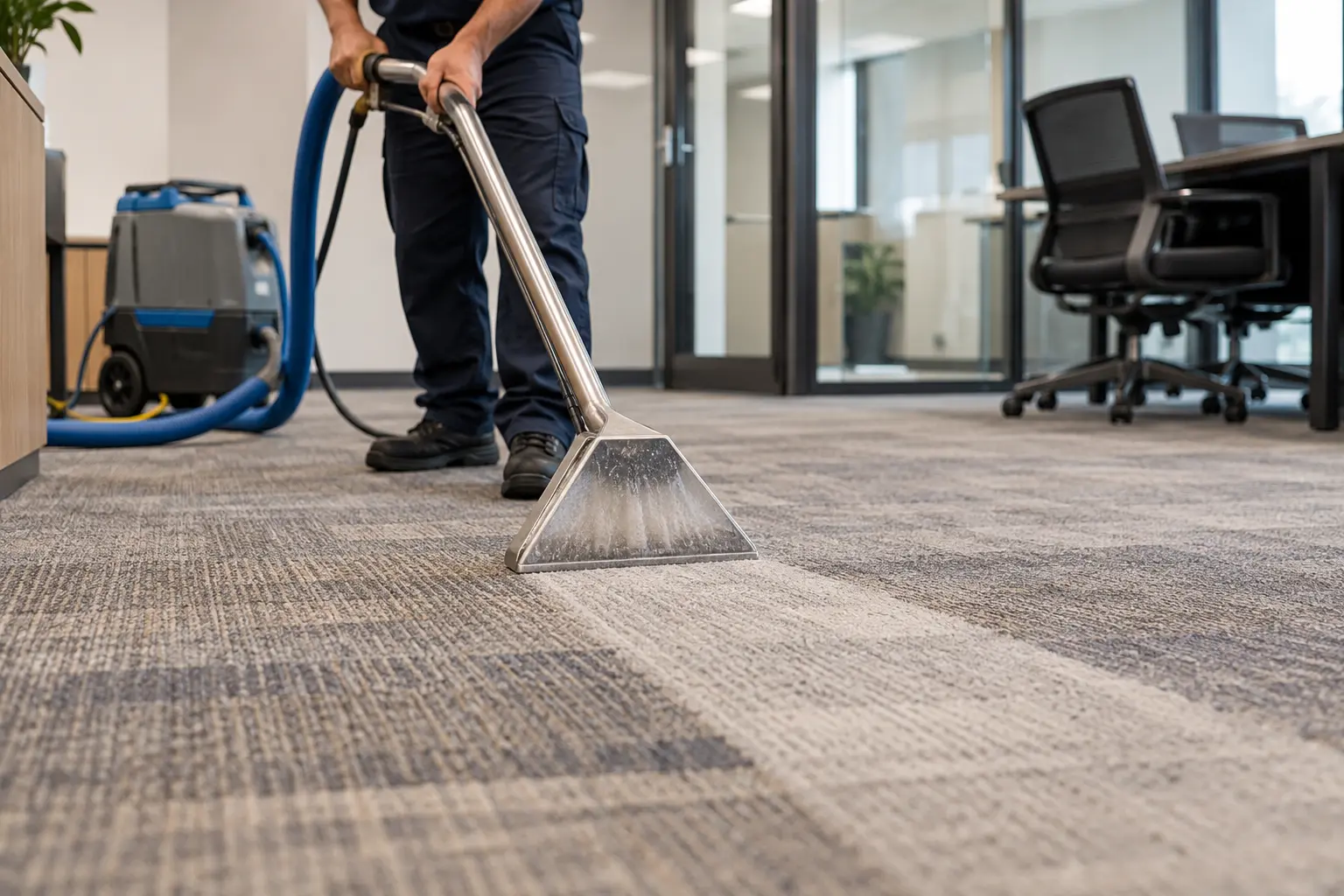
A coffee spill disappears after the carpet is cleaned. By the next morning, a brown patch is back in almost the same spot. For an office manager who just approved the work, it can look as though the cleaning never happened.
But returning commercial carpet stains do not all have the same cause. Some originate below the visible fibers. Others develop when leftover cleaning products attract new dirt. Some marks are not removable stains at all but changes in the carpet’s color. The timing and appearance of the mark can help a facility team decide what to ask for next.
When a Stain Comes Back During Drying, Look for Wicking
A spill can travel through the carpet pile into its backing and, depending on the installation, the cushion below. Surface cleaning may remove what is visible without removing all of the dissolved material deeper down. As the carpet dries, moisture can carry that material back toward the tips of the fibers. Cleaning professionals call this process wicking, or wick-back.
The Carpet and Rug Institute’s commercial carpet maintenance standard recognizes wicking as the movement of liquid, soil, or other residue from the backing to the fiber tips during drying. A spot that reappears within hours of cleaning or after drying overnight is worth investigating before repeating the same treatment.
Coffee, tea, and other liquid spills are common examples, but the type of spill alone does not establish the cause. Ask whether the area was heavily saturated, how much moisture was extracted, and whether the carpet dried promptly.
A Spot That Darkens After Foot Traffic May Be Different
Suppose the carpet looks good once it is fully dry, but the same area gradually becomes gray or dingy as employees walk over it. That pattern may point to rapid resoiling rather than wick-back. Cleaning agents that are not adequately removed can leave residue that holds onto new soil.
This distinction matters because adding more shampoo is not automatically the answer. A qualified technician may need to assess the products previously used, the carpet fiber, and whether an appropriate rinse and extraction process is needed. Cleaning methods should follow the carpet manufacturer’s instructions, particularly when a warranty applies.
A stain that returns during drying and a patch that darkens over several busy days may look similar in a complaint log. They should not be treated as interchangeable problems.
Not Every Mark Can Be Cleaned Away
Some marks are changes in the material rather than removable dirt. Bleaching, dye loss, or chemical damage can leave a lighter or discolored patch even after soil has been removed. Browning or yellowing following wet cleaning may also call for a different assessment from ordinary spot removal.
Before promising another cleaning will restore the area, compare the mark with its appearance before service. Photos, spill history, and a small inspection of the affected carpet can help establish whether the problem is soil, residue, or damage. If the color itself has changed permanently, replacement or another flooring remedy may be more realistic than repeated stain treatments.
What Facility Managers Should Document Before a Reclean
A useful service request is more specific than “the stain is back.” Record when the carpet was cleaned, when the mark reappeared, and whether the area was still damp. Note its location, approximate size, color, and any known spill or previous spot-treatment product. Take a photograph in consistent lighting so the cleaning team can compare conditions.
It also helps to check whether the issue is isolated to one spill location or repeated across a traffic lane. A single brown spot after drying suggests a different investigation from widespread gray patches developing after use.
Share these observations with the cleaning supervisor and ask for a diagnosis before authorizing another full wet cleaning. The objective is to select a suitable method, not simply to use more water or a stronger chemical.
How a Professional Cleaning Plan Can Reduce Repeat Problems
A careful carpet-care process starts with identifying the carpet material and the type of soil. The Carpet and Rug Institute advises prompt spill response, blotting rather than aggressive scrubbing, and testing cleaning products for colorfastness. Its commercial standard also notes that additional air movement can help shorten drying and reduce wicking.
For a recurring spot, a technician may consider controlled moisture, adequate extraction, thorough removal of cleaning residue, and drying conditions. If a spill reaches deeper layers, surface treatment may have limits. The appropriate response depends on the carpet construction and the extent of contamination; there is no universal guarantee that every mark can be removed.
Longer term, combine prompt spill reporting with routine vacuuming, appropriate spot treatment, and periodic professional maintenance. This can help teams catch trouble areas early without overcleaning the entire floor whenever one mark returns.
Get a Clearer Answer Before Cleaning the Same Spot Again
If a carpet stain keeps reappearing in your facility, Astro Cleaners can help you discuss the cleaning history, identify visible problem areas, and determine what kind of follow-up service may be appropriate. The right next step starts with understanding why the mark returned.
Explore Astro Cleaners’ commercial cleaning services for Houston-area businesses and discuss your facility’s carpet-care needs. Where staining has reached inaccessible layers or caused permanent damage, a clear assessment is more valuable than a promise that another pass will make it disappear.