
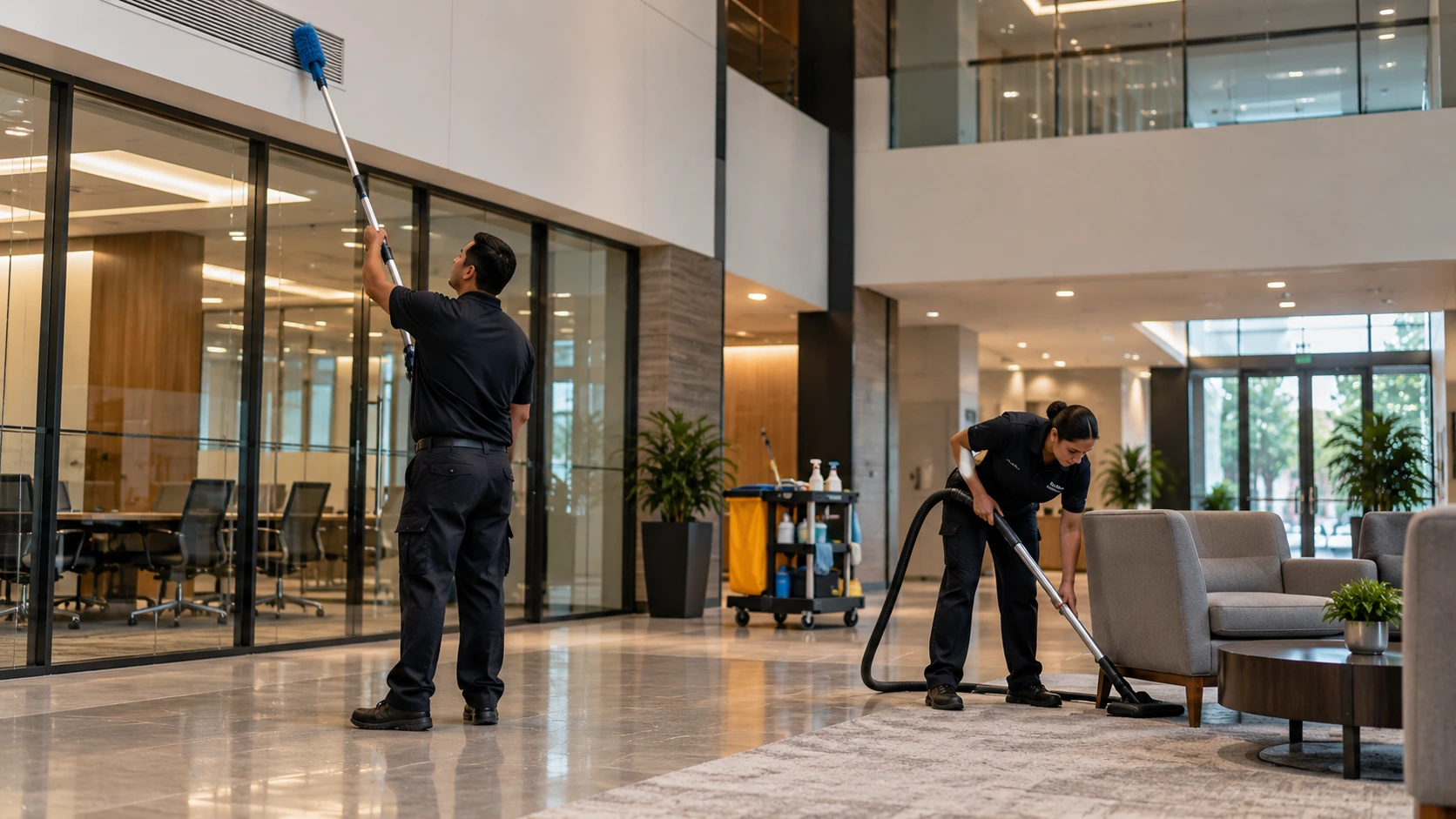
A building can be cleaned every night and still reach a point where routine service no longer feels like enough. The trash is emptied, restrooms are serviced, floors are maintained, and high-touch areas are addressed, yet dust is building above eye level, edges look tired, or certain rooms never quite return to a clean baseline. For a facility manager, that can raise an important question: does the regular cleaning scope need to change, or is it time for a deeper reset?
Commercial deep cleaning vs. janitorial cleaning is not really a choice between good and better cleaning. They serve different purposes. Routine janitorial service is designed to maintain a facility from day to day, while deep cleaning is usually used to address accumulated soil, neglected details, or areas that fall outside the recurring scope.
The better decision starts with the condition of the building and what the current service plan is actually designed to cover. A facility that needs one neglected task added to the schedule does not necessarily need a full deep clean, and a building with widespread buildup may not be fixed by simply asking the nightly crew to clean harder.
What Routine Janitorial Cleaning Is Designed to Maintain
Janitorial cleaning is the recurring work that keeps a commercial space functional, presentable, and ready for everyday use. Depending on the facility, that may include trash removal, restroom care, vacuuming, mopping, spot cleaning, replenishing supplies, and wiping commonly touched surfaces.
The strength of a recurring plan is consistency. It keeps ordinary soil from piling up and gives staff, tenants, customers, or patients a reliable baseline from one service visit to the next. The schedule can be adjusted around traffic and use, but the work is usually organized around tasks that need to happen regularly rather than occasional projects.
That means routine cleaning has boundaries. Areas behind heavy furniture, high ledges, vents, detailed baseboards, deep grout cleaning, carpet extraction, and other periodic work may not belong in the nightly or several-times-a-week scope unless they were specifically included. When those boundaries are not clear, a building can look cleaned and still show accumulated wear in places the recurring checklist was never meant to address.
What Makes a Commercial Deep Clean Different
A commercial deep clean is usually more intensive and more selective than routine janitorial work. The goal is not simply to repeat the normal checklist with more effort; it is to target buildup, overlooked areas, and periodic tasks that need additional time, equipment, or detail.
That can mean moving or working around furniture to reach edges, cleaning above normal eye level, or addressing neglected corners and fixtures. More detailed floor or grout care may also belong in the project when ordinary maintenance is no longer restoring the area. Some facilities need concentrated work only in a few high-use zones, while others need a broader reset. The exact scope should depend on the building rather than on a generic top-to-bottom package.
Deep cleaning is also useful when a building needs a reset before something changes. A tenant move-in, reopening, inspection, executive visit, seasonal transition, renovation, or unusually busy period can expose areas that routine service has kept acceptable but not fully restored. In those situations, the deeper service has a clear purpose and a defined finish line.
A Deep Clean Should Solve a Specific Problem
The strongest reason to schedule deeper service is not that a calendar says it is time. It is that the facility is showing a condition the current recurring plan is not resolving.
One sign is repeated buildup in places that sit outside the normal scope. Dust may collect on high horizontal surfaces, floor edges may stay dull, grout may remain dark after routine mopping, or furniture bases and corners may show soil even though the main traffic areas are maintained. Another sign is that staff keep reporting the same visual problem after service. That does not automatically mean the janitorial team is underperforming; the requested result may require a different process, more time, different equipment, or a task that was never included in the regular scope.
The distinction matters because the fix should match the cause. If one restroom needs periodic detail work, add that task. If several areas throughout the building show accumulated soil that routine service cannot catch up with efficiently, a broader deep-clean project may make more sense.
When Adjusting the Recurring Scope Is Enough
Not every facility problem calls for a one-time deep clean. Sometimes the smarter move is to revise the janitorial plan so the issue does not keep returning. If a lobby gets heavier traffic than it did when the contract started, it may need more frequent floor attention. If a break room is being used by twice as many employees, the existing service frequency may no longer fit.
Baseboards, interior glass, high dusting, or other periodic tasks can sometimes be added on a rotating schedule instead of handled as a separate project. That is why a walkthrough can be more useful than a generic package: it helps separate one-time accumulated work from tasks that should become part of normal maintenance. A deep clean can reset the building, but if the recurring scope never changes, the same weak spots may gradually return.
The Facility Type Changes the Decision
A busy office, a medical facility, a warehouse, a fitness center, and an apartment common area do not accumulate soil in the same way. The areas that need more frequent attention, the products that are appropriate, and the level of detail required can all change with the building’s use.
High-touch and high-traffic areas generally need more regular attention than low-use surfaces. CDC guidance for community facilities recommends cleaning high-touch surfaces regularly and other surfaces when visibly dirty, with additional disinfection in situations where illness or facility risk calls for it. That does not define a commercial deep-cleaning schedule, but it reinforces the larger point that cleaning frequency and method should follow how a space is actually used.
Facility-specific requirements matter too. Healthcare, food-service, childcare, and certain industrial settings can have cleaning practices or regulations that go beyond a general office plan. A deep-cleaning proposal should respect those requirements rather than treating every commercial building as interchangeable.