
A clean-looking restroom can still have an odor problem.
The floors have been mopped, the fixtures wiped down, and the trash emptied. Yet by midmorning, someone is reporting the same unpleasant smell. For a facility manager, that is more than an awkward complaint: it suggests the routine may be addressing what is visible without finding the source.
Persistent commercial restroom odor can come from residue around fixtures, damp materials, overlooked drains, or building systems that cleaning alone cannot fix. The useful question is not which air freshener smells strongest. It is where the odor starts, when it returns, and who is equipped to resolve it.
Why Odors Return After the Restroom Has Been Cleaned
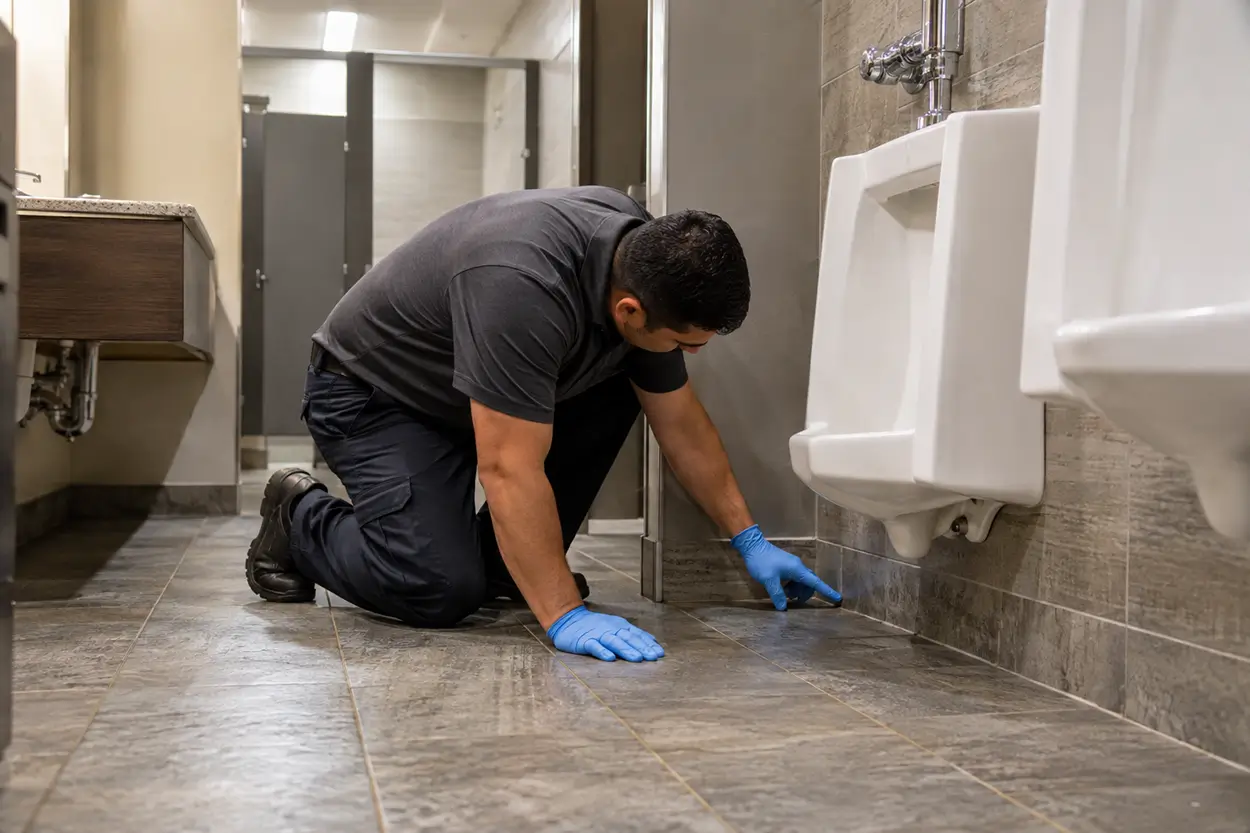
A mop can make a floor look better while leaving material in grout lines, corners, and the narrow joints where fixtures meet the floor. Splash zones around toilets and urinals deserve particular attention. If those surfaces receive only a quick pass during routine service, residue may remain even though the room looks tidy.
The problem can also be the tools or process. A dirty mop head, poorly maintained equipment, or cleaning solution used beyond its intended purpose can spread residue instead of removing it. Cleaning should physically lift soil from the surface; adding fragrance is not a substitute for that work.
Restroom odors are not always a housekeeping failure. A dry floor-drain trap can allow sewer gas into a building, while a leaking fixture may leave hidden moisture. These are maintenance issues to investigate, not problems to solve by repeatedly applying more cleaner.
Start With the Places Routine Cleaning Can Miss
Ask the cleaning team to inspect wall-to-floor junctions, grout lines, baseboards, and the areas around toilet and urinal bases. Pay attention to fixture edges where splashes can collect. These spots may need deliberate agitation and a surface-appropriate product rather than another general floor mopping.
Trash containers and sanitary disposal units are another straightforward check. Odors may remain when the liner is changed but the container itself has residue or moisture. The same applies to floor mats, neglected corners, and cleaning equipment stored while damp.
If a targeted cleaning produces an improvement that lasts, the likely issue was within the cleaning scope. If the smell returns almost immediately or appears strongest near a drain or wall cavity, document the location and involve building maintenance rather than escalating chemical use.
Check Drains, Leaks, and Ventilation
A restroom that smells like sewage warrants a different response from one that smells musty or has a lingering urine odor. Building staff should check for infrequently used floor drains, visible leaks, slow drainage, and signs of persistent moisture. A qualified plumber or facilities technician should evaluate suspected trap, pipe, or sewer-vent problems.
Air movement matters, too. The EPA recommends controlling indoor pollution at its source and improving ventilation when appropriate. If an exhaust fan is not operating properly or the room feels unusually humid, ask the building’s HVAC or maintenance team to inspect it. More frequent surface cleaning cannot compensate for a ventilation fault.
Do not ignore an unusually strong or sudden sewer-like odor, particularly if anyone feels unwell. Restrict access as appropriate and follow the building’s safety and maintenance procedures while the source is assessed.
Match the Solution to the Source of the Smell
When the source is surface residue, a focused restroom deep cleaning may help. The scope should identify exactly which fixtures, joints, grout lines, floors, and waste containers require attention. It should also specify how the team will prevent dirty tools from transferring residue back onto cleaned surfaces.
When the source is a plumbing or ventilation defect, send the issue to the appropriate trade. A cleaning provider can report what it observes and clean affected surfaces within its scope, but it should not promise to repair drain traps, hidden leaks, or exhaust systems. That distinction protects the building from paying for repeated cleaning that never addresses the cause.
Use cleaning chemicals carefully throughout the process. The CDC advises cleaning visibly dirty surfaces before disinfecting when disinfection is needed, following product labels, and never mixing cleaning chemicals. OSHA warns that combining bleach and ammonia-containing products can release dangerous gases. Stronger-smelling chemicals are not evidence of a better result.
Stop the Same Complaint From Recurring
Instead of simply asking for an extra restroom cleaning, record where the odor is strongest and when it returns. Does it appear after peak traffic, near one urinal, beside a floor drain, or first thing in the morning? Those details help separate a cleaning gap from a maintenance problem.
Next, request a focused inspection with the cleaning supervisor and facilities contact. Agree on which areas will be cleaned more thoroughly, which equipment or products will be checked, and which observations need plumbing or HVAC follow-up. Revisit the restroom after normal use, not just immediately after the crew finishes, to see whether the change holds.
Finally, make the successful fix part of the regular scope where appropriate. Some restrooms need more frequent attention because of traffic; others need periodic detail cleaning in specific trouble spots. The right schedule comes from the condition of the space, not a generic promise that every restroom needs the same treatment.
Get to the Source With a Commercial Cleaning Partner
If your commercial restroom still smells unpleasant after regular cleaning, Astro Cleaners can help you identify cleaning-related problem areas and determine whether a more focused cleaning approach is needed. The goal is to address lingering residue and overlooked surfaces rather than simply masking the odor.
Astro Cleaners provides commercial cleaning services for Houston-area businesses, with cleaning plans tailored to each facility’s needs. A closer look at high-traffic restrooms, fixture edges, and difficult-to-clean surfaces can help establish the right scope of work. When the problem involves plumbing or ventilation, the appropriate maintenance professional should address the underlying issue.