
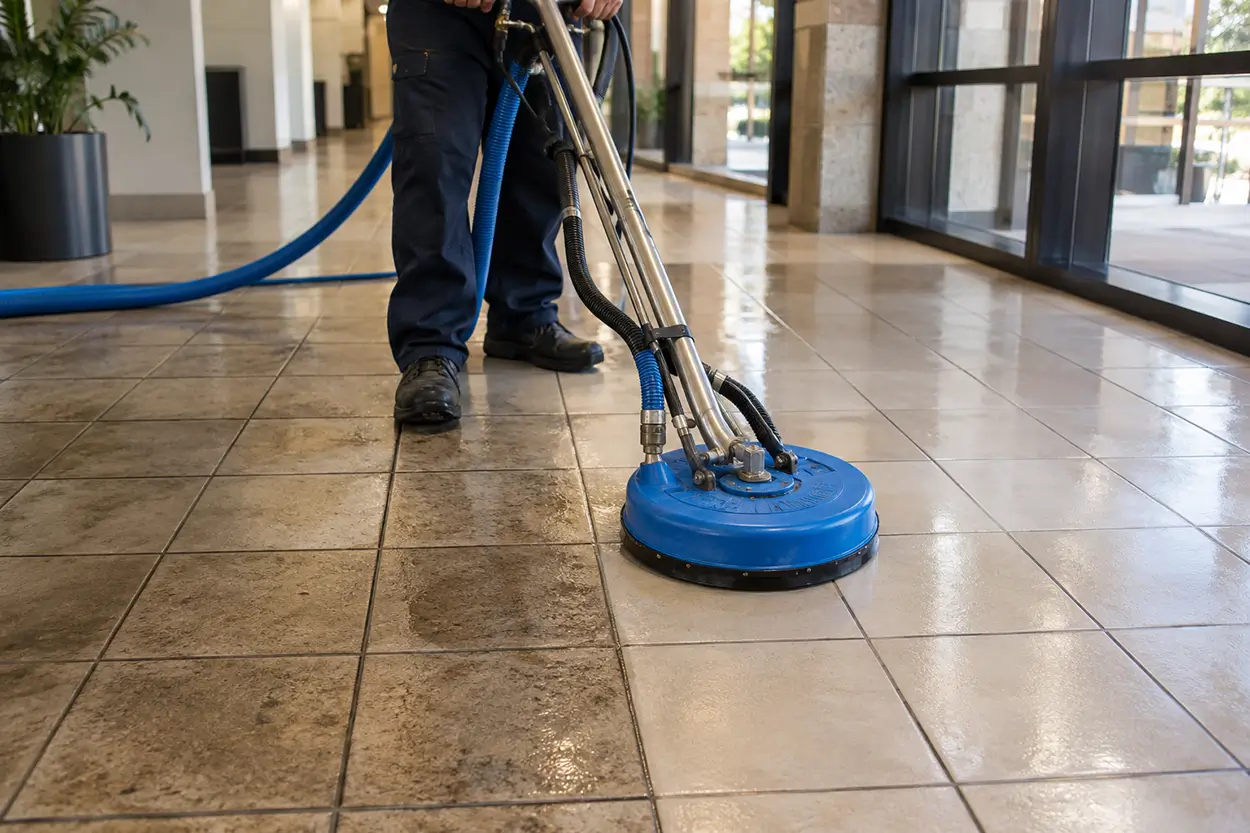
A tiled lobby can be mopped every night and still look as though nobody has really cleaned it. The tile faces may be passable, yet the grout lines stay dark, traffic lanes look uneven, and corners or restroom floors never quite return to the color you remember. That is frustrating for a facility manager because routine cleaning is clearly happening, but the floor still sends the wrong message.
The problem is not always poor housekeeping. Routine mopping and commercial tile and grout cleaning do different jobs. Daily or nightly maintenance controls loose soil and fresh spills; periodic deep cleaning is meant to deal with buildup that has settled into grout joints, textured surfaces, or heavily used areas and is no longer responding to normal maintenance.
Before scheduling a more aggressive service, though, it helps to know what you are actually looking at. Dirty grout, cleaner residue, damaged joints, stained material, and worn tile can all create a similar “still dirty” appearance, but they do not call for the same solution.
Why Mopping Can Leave a Floor Looking Uneven
Mopping is important because it removes day-to-day soil before it becomes a bigger problem. But a mop also works across a broad surface, while grout sits in narrow joints that may be slightly recessed or textured. If the water or cleaning solution is already carrying soil, some of that material can be redistributed instead of fully removed.
Manufacturer guidance reflects that difference. Daltile advises removing loose dirt before wet cleaning, using fresh water, and rinsing floors well so residue is not left behind. For large or heavily soiled commercial areas, the company recommends mechanical scrubbing and equipment that can recover the dirty solution rather than simply moving it across the floor. That distinction matters when the grout is holding what a mop keeps leaving behind.
Grout Lines Often Tell the Story First
When a tiled floor starts looking tired, the grout can make the whole surface appear worse than the tile itself. Grout joints collect tracked-in soil, spills, cleaner residue, and moisture differently from a smooth glazed tile face. The Tile Council of North America also warns that oily or wax-based cleaners can leave films in grout and that even alkaline cleaners can leave a sticky residue if they are not rinsed properly.
That is why a floor may look reasonably clean from a distance but show dark lines, blotchy edges, or a dingy grid pattern up close. High-traffic entrances, break areas, restrooms, corridors, and food-service zones can reveal the contrast sooner because they receive more soil, spills, and repeated cleaning.
A useful clue is whether the discoloration follows the grout network more strongly than the tile surface. If it does, the next step should be an evaluation of the joints and the maintenance history rather than simply increasing the strength of whatever cleaner is already being used.
Residue Can Look Like Dirt — and Attract More of It
Sometimes the floor is not just holding soil; it is holding cleaning product. Daltile cautions that cleaners that do not require rinsing can leave residue, and the Tile Council notes that soap films can attract dirt. That can create the maddening cycle where a floor is cleaned frequently but seems to get dull or tacky faster.
This is one reason more chemical is not automatically better. The cleaner needs to be compatible with the tile, grout, and any sealer already present, and it needs to be diluted and rinsed according to the manufacturer’s directions. A maintenance program that ignores those details can unintentionally contribute to the appearance problem it is trying to solve. Sometimes the better correction is not stronger chemistry but better rinsing and soil recovery.
When Deep Cleaning Becomes the Better Next Step
Deep cleaning makes sense when routine maintenance is no longer restoring a reasonably uniform appearance and the issue appears to be embedded soil or buildup rather than physical damage. Commercial deep cleaning may use agitation, dwell time, specialized tile-and-grout products, and equipment that extracts the loosened soil and cleaning solution from the surface.
The trigger should be the condition of the floor, not a universal calendar. MAPEI notes that routine cleaning frequency depends on the type and amount of foot traffic, while Daltile says heavier tile and grout cleaning should be scheduled according to use and environment. A busy lobby, locker room, or restroom may need attention sooner than a low-traffic conference area in the same building.
A good time to evaluate the floor is when grout remains visibly darker after normal cleaning, traffic lanes no longer match protected areas, residue returns quickly, or staff are repeatedly spot-scrubbing the same zones without getting a consistent result. Those signs do not prove that deep cleaning will correct every defect, but they do justify looking beyond ordinary mopping.
Identify the Surface Before Choosing the Cleaning Method
“Tile” covers more materials than most people realize. Ceramic and porcelain are common in commercial buildings, but facilities may also have natural stone, quarry tile, specialty finishes, or different grout and sealer systems in adjacent areas. A process that is appropriate for one installation can be too aggressive for another. That is why surface identification matters before anyone reaches for acidic, highly alkaline, abrasive, or solvent-based products. Testing and product compatibility are more useful than assuming every dark grout line needs the strongest cleaner available.
Know What Cleaning Cannot Repair
Deep cleaning can improve embedded soil, surface buildup, and some discoloration, but it cannot rebuild a failing grout joint. Cracked, missing, powdering, or loose grout is a repair issue. Chipped tile, movement in the installation, failed caulk, or permanent staining may also need a restoration or repair scope instead of another cleaning pass.
Separating maintenance from repair keeps expectations realistic. A facility may need deep cleaning across most of a floor and targeted grout repair in selected areas, or it may discover that the floor is clean but the grout color has changed permanently. The right recommendation should be based on what the surface can reasonably recover from cleaning, not on how old it looks.
Build Deep Cleaning Into Routine Facility Care
The best result is usually not a choice between routine janitorial service and occasional deep cleaning. They support each other. Frequent removal of loose soil and spills helps protect the floor between deeper services, while periodic attention to grout lines and high-traffic areas can reset areas that ordinary mopping no longer handles well.
The maintenance plan should also change with the building. Rainy periods, construction activity, and heavier customer traffic can all increase the soil load.
Changes in how a restroom, break area, or entryway is used can matter just as much. Reviewing the floor by zone instead of applying one rigid schedule to every tiled area makes the program easier to defend and adjust.
Plan Commercial Tile and Grout Cleaning With Astro Cleaners
If routine mopping is no longer giving your tiled areas a clean, even appearance, Astro Cleaners can help evaluate what the floor is showing before recommending a more intensive service. The goal is to distinguish ordinary maintenance needs from embedded buildup, residue, or conditions that may require repair rather than simply prescribing the strongest cleaning process.
Astro Cleaners provides commercial cleaning services for Houston-area facilities, including tile and grout deep cleaning. A walkthrough can identify high-traffic problem areas, match the scope to the floor, and schedule the work around normal operations.