
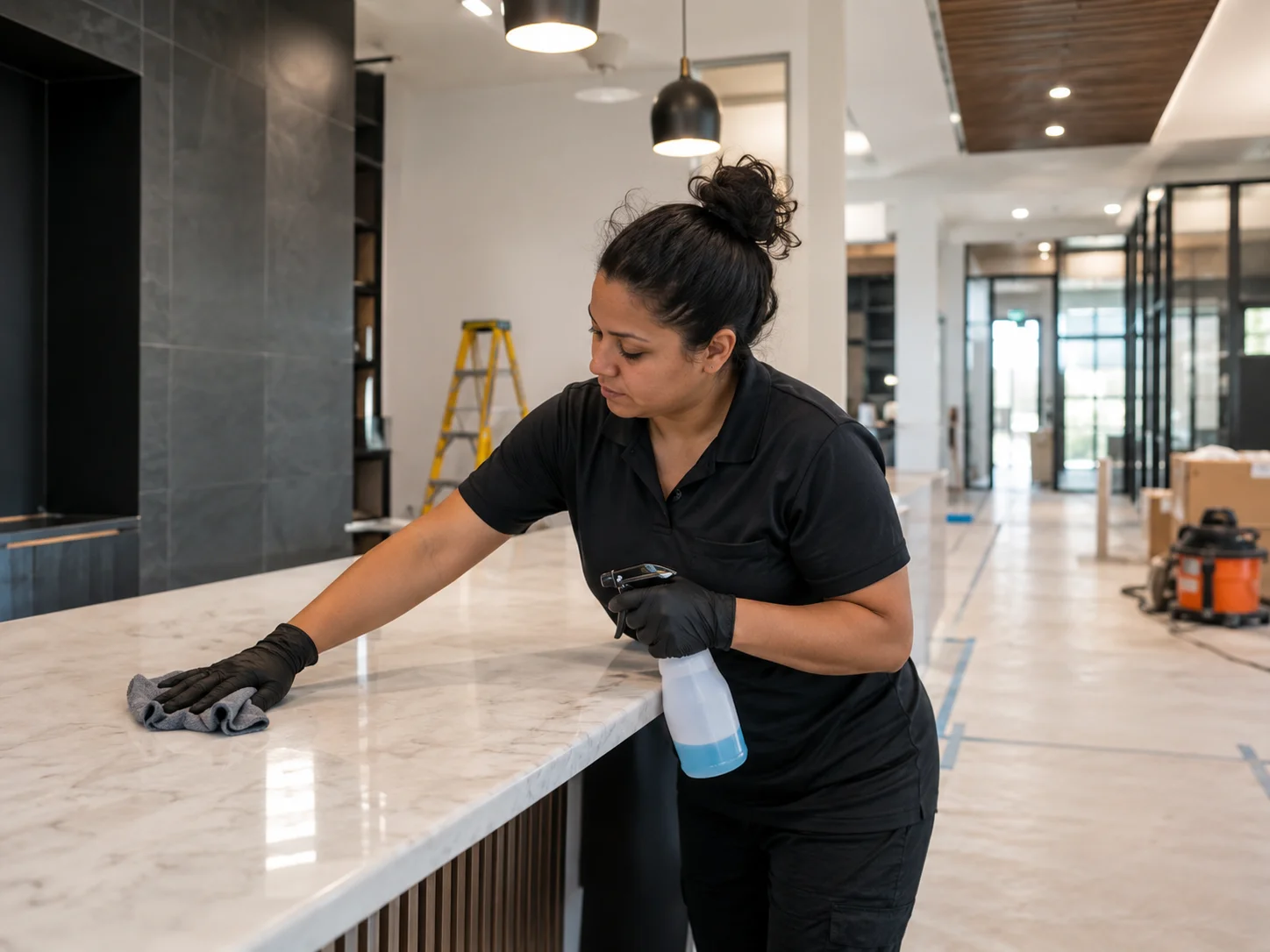
A construction project can be technically finished and still look a long way from ready. The tools may be gone, the paint may be dry, and the flooring may be in place, but fine dust has usually settled in places no one noticed while crews were working. Labels cling to new fixtures, glass shows fingerprints, and bits of packaging or adhesive remain tucked along edges and corners.
That final layer of cleanup is what separates a completed jobsite from a space that actually feels ready to hand over. For a property manager, contractor, or business owner, a post-construction cleaning checklist is useful because the mess left behind by construction is different from ordinary office dirt. It takes a little more patience, better timing, and a closer eye for the details that stand out once the larger work is done.
Wait Until the Mess-Making Work Is Really Over
Scheduling the final clean too early is one of the easiest ways to create duplicate work. Drywall sanding, ceiling work, drilling, tile cutting, and punch-list repairs all have a habit of sending dust back into rooms that looked clean the day before. If contractors are still moving tools and materials through the space, floors and counters can be dirtied again almost immediately.
The better time for a detailed clean is when most of the dust-producing trades are finished and larger scraps, packaging, and equipment have been removed. A few small touch-ups may still happen, but cleaners should not be working around an active jobsite. Before anyone begins, a walkthrough with the project manager can also help identify delicate finishes, areas that still need restricted access, and anything that requires special handling.
Construction Dust Does Not Stay Where It Started
Fine construction dust travels. It lands on top of door frames, inside cabinets, along baseboards, on light fixtures, around vents, and across surfaces that may never have been directly involved in the work. Once the room is empty and the overhead lights are on, that residue becomes much easier to see.
This is why working from the top of the room downward makes practical sense. Higher ledges, fixtures, trim, frames, and accessible vents are cleaned before counters and floors, so settled dust is not falling onto areas that have already been finished. In a new or renovated space, this kind of detail work often makes a bigger visual difference than heavy scrubbing.
New Surfaces Need Care, Not Aggressive Cleaning
Post-construction cleanup comes with a small complication: many of the surfaces are brand new. Glass may still have stickers or protective film on it, counters may have adhesive residue, and door frames or hardware can be marked from installation. It is tempting to attack those spots with the strongest cleaner or scraper available, but that is also how new finishes get scratched, dulled, or discolored.
Material matters. A residue that comes off easily from one type of glass or laminate may need a different method on another. Newly installed stone, stainless steel, coated fixtures, specialty flooring, and painted surfaces should be cleaned with products and techniques that fit the finish. The goal is to remove what construction left behind without creating a new problem in the process.
Glass, cabinetry, counters, and built-in features deserve a slow second look because they tend to hide the kinds of details people notice during turnover. Dust collects along shelf edges and drawer tracks. Fingerprints remain around handles. A cabinet can look perfect from across the room and still reveal construction debris the moment someone opens it.
Save the Floors for Later
Floors usually tell the story of the entire project. Even when they have been covered, they can pick up fine dust, scuffs, tape residue, footprints, paint specks, and tracked-in debris as contractors move through the building. Carpet can hold particles below the surface, while hard flooring may show a haze that was not obvious until the rest of the space was cleaned.
Because everything eventually falls downward, floors are best handled after higher surfaces, cabinetry, fixtures, and glass have been detailed. The final method depends on the material. Some new floors only need careful vacuuming and damp cleaning, while others may require a specific manufacturer-approved process or separate specialty floor care.
Check the Rooms People Will Use First
Restrooms and breakrooms are easy to underestimate because they may look complete before they are actually ready. A restroom can have brand-new fixtures and still show installation dust around the sink, marks on mirrors, debris near partitions, or residue on the floor. Breakrooms often hold the same fine dust inside cabinets and along counters that appears elsewhere in the building.
These spaces are worth extra attention because people interact closely with them. A dusty shelf, marked mirror, or dirty sink is more noticeable than a little residue in a far corner of a large room. Cleaning these rooms well also helps the property feel occupied and functional rather than newly constructed.
The Small Things Usually Show Up During the Walkthrough
Once the obvious dust and debris are gone, the remaining issues are often small. A sticker is still attached to a new fixture. Dust has collected behind a door. There is a line of debris along a floor transition, or a little tape residue remains near a window frame. None of those problems is large, but together they can make a newly finished space feel unfinished.
That is why a second walkthrough matters. Instead of checking only from a cleaning perspective, walk the property the way a tenant, owner, customer, or inspector would. Start at the entrance, look at the room under normal lighting, open cabinets, check edges, and notice what catches the eye without searching for it. Those are usually the details that matter most on handoff day.
Know the Difference Between a Rough Clean and the Final Clean
Construction cleanup often happens in more than one pass. An earlier rough clean is about getting larger debris, packaging, scraps, and obvious dust out of the way so the space is easier to work in. That stage may happen while some trades are still finishing their work.
The final clean is more detailed and happens closer to turnover. Glass, fixtures, cabinetry, counters, restrooms, floors, and other finished surfaces receive the careful attention that makes the property look complete. A short touch-up may still be needed after inspections, punch-list repairs, furniture delivery, or other last-minute activity, but that should be a targeted pass rather than a repeat of the entire job.
A checklist helps keep the process organized, but it should not replace judgment. A retail storefront with extensive glass will need a different emphasis from a medical office, restaurant build-out, or large corporate renovation. The best final clean is the one that responds to the actual building, the finishes inside it, and the way the space will be used once the doors open.
Prepare Your Commercial Space for Turnover With Astro Cleaners
Once construction is complete, the last thing a project manager or property owner wants is leftover dust, debris, and installation residue distracting from the finished work. Astro Cleaners provides professional commercial cleaning for newly built and renovated properties throughout Houston and surrounding areas.
Our commercial cleaning services can help prepare offices, retail spaces, medical facilities, and other commercial properties for final walkthroughs, tenant turnover, or opening day. Contact Astro Cleaners to request a free, no-obligation quote and discuss the cleaning needs and timeline for your construction or renovation project.